
Inspiring Tales of the Shining Corona Warriors Who Achieved 100% Vaccination with idioms and Proverb
( S. Nitin )
Bhopal.
Even though the severity of COVID may have subsided, it still haunts the general public. From America's First Lady Jill Biden to various parts of India, there are still COVID patients to be found. Although the impact and fear of COVID is now a thing of the past, its stories and characters are endless.
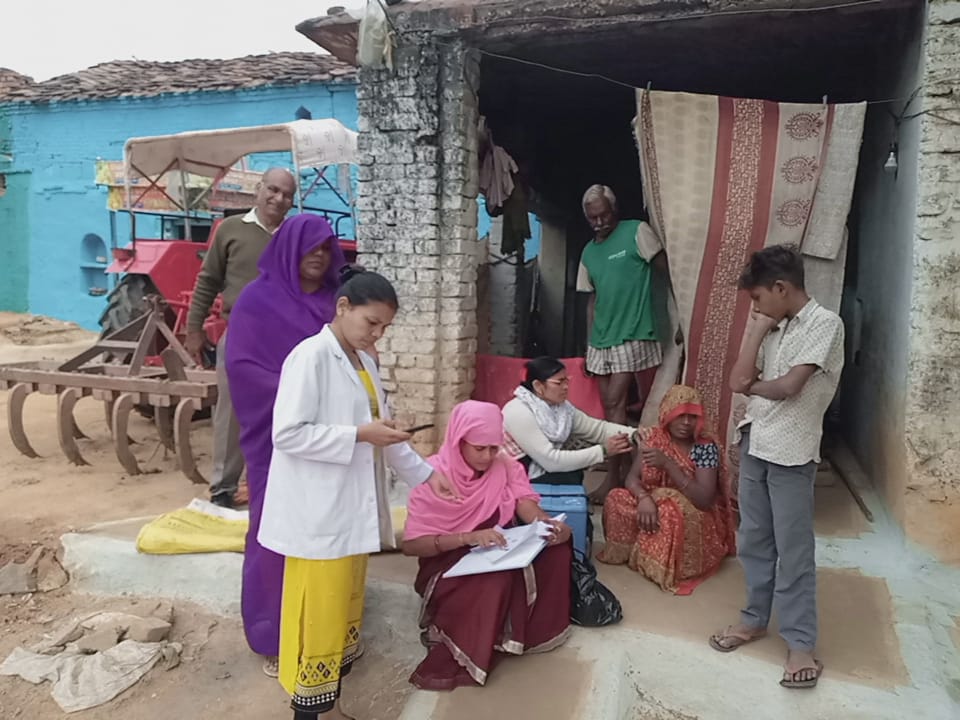
"In the final phase of the second wave of COVID, I was infected, and this was the time when field workers were getting infected. News of deaths was coming in from all sides. These were the medical and health staffs who were going from one doorstep to another, from one neighborhood to another, from one street to another, from one village to another, administering vaccines and explaining its importance. It was a battle against COVID, in which many comrades made the ultimate sacrifice," says 43-year-old Manju Srivastava, who serves as an ANM (Auxiliary Nurse and Midwife) in Bhopal under the National Health Mission (NHM).
Before this, Manju had never even realized it, neither had she seen it in bad dreams, nor during the time when she saw a COVID patient struggling to breathe in the hospital for the first time. However, as soon as she became infected herself, she started seeing those scenes repeatedly.
Manju felt like her body was gradually slipping away from her. This was the same phase when every human considered staying alive and avoiding COVID infection as nothing short of a miracle. It was a terrifying time when nearly 50 ANMs had lost their lives to COVID, and many others were severely infected, swinging between life and death.
Manju had not yet recovered when one by one, her family members fell victim to COVID. Out of 8 family members, 5 (father, mother, brother, sister-in-law) got infected. Even the children in the house were not spared by the virus.
Manju was in a dilemma, whether to serve her COVID-positive parents, brother, sister-in-law, or other family members, or to fulfill her duty? In the end, she left her family members in the care of COVID protocols, medications, and prayers and returned to her duty.
Manju says, "With medication and a single thought, I returned to duty, believing that in this difficult phase, it is very important to reach people, neighborhoods, and villages."
During this phase, hundreds of kilometers away from the capital, a different kind of battle was taking place in rural, backward, and tribal areas. There was a unique effort going on to adopt the vaccine using the prevailing Bundeli language and local proverbs to persuade people. Some ANMs started emphasizing this idea in a unique way.
"Our local residents were not willing to get vaccinated at all. I would wait all day at my center, and only a few people would come for vaccination," says Uma Ahirwar, an ANM stationed in Orachha Tehsil in Nivari district, which is located about 350 kilometers from Bhopal, in the remote Bundelkhand region.
People teased her for her efforts and counted the shortcomings of vaccination. In response, she started using Bundeli proverbs to convey her message, saying things like, "If the horse doesn't drink, the well can't be blamed" (meaning, people need to take responsibility for their health).
These Bundeli proverbs began to have an impact slowly but surely. During the second wave, the district achieved a milestone in vaccination. A vaccination center that used to be empty at one point had to call the police to control the crowds.
Just like Uma, Sunita Ahirwar, an ANM stationed in various sectors of Kuluwa Sab Section in this block, was working in a different way to eliminate the apathy towards vaccination among rural people, especially women.
First, she initiated a dialogue with the village people through the prevalent language of the area. She began her conversations addressing people with familiar terms like "Daau, Chacha, Mamma (Mama), Fua (Aunt), Nanni (Grandma), Amma, and Bau (Mother)," explaining with proverbs. In these discussions, she often used the sweet threat-filled tone of Bundeli, saying, "When you reap what you did not sow, you'll reap a whirlwind" (meaning, families are ruined when COVID enters).
Sunita worked to eliminate the reluctance towards vaccination among the 5270 people in these five villages. She achieved a 100% vaccination rate for both doses in these sectors.
Moreover, as this area is adjacent to the Uttar Pradesh border, Uma and Sunita also persuaded people from Uttar Pradesh to get vaccinated.
In the Nivari district of Madhya Pradesh, Chief Medical and Health Officer Dr. R.C. Malaria credits the tireless efforts of ANMs (Auxiliary Nurse and Midwife) like Uma and Sunita for the success of the vaccination campaign. These dedicated warriors came up with an innovative idea to educate people about vaccination through local folk songs, known as "Alha," and local proverbs. They formed teams of volunteers and male employees who sang Alha songs rooted in the Bundeli culture, delivering the message of vaccination. According to Dr. R.C. Malaria, without the risk-taking ANMs, achieving 100% vaccination in this remote region would have been nearly impossible.
Madhya Pradesh State Vaccination Officer Dr. Santosh Shukla acknowledges that ANMs played the most critical role in achieving the vaccination targets during the COVID-19 vaccination drive. Madhya Pradesh has approximately 14,000 ANMs, with over 98% of them being women.
ANMs in Madhya Pradesh fall into two categories: regular and contract-based. Both categories have around 7,000 ANMs each. Regular ANMs work under the Health Department and are posted in government hospitals, community health centers, primary health centers, civil hospitals, and medical college hospitals, providing healthcare services in these facilities. On the other hand, contract-based ANMs, who are employed by the National Health Mission (NHM), work in specific areas, including Anganwadi centers and schools, going door-to-door to administer vaccines.
While regular ANMs receive a higher salary, contract-based ANMs earn significantly less. The state government had announced that contract-based ANMs would be given salaries and benefits equivalent to regular employees, but this promise has not been fulfilled yet. This disparity in salary and conditions has led to protests among ANMs.
Regular ANMs have also been demanding promotions for years, and despite government assurances, they have not seen any progress. The Progressive United Employees Welfare Association, led by its officer Surjkala Sahare, warns that if the government does not address the demands of regular ANMs, they might go on strike.
Contract-based ANMs, on the other hand, have been raising their voices against wage and condition disparities for years. They receive nearly half the salary of regular ANMs. Madhya Pradesh Chief Minister Shivraj Singh Chouhan announced a month ago that all contract workers would be given salaries and benefits equivalent to regular employees, but this promise remains unfulfilled. The terms proposed by the government have also faced opposition from organizations.
Ramesh Rathore, the State President of the Madhya Pradesh Contractual Officer Employees Union, says, "If the government does not implement the decision soon, contract ANMs may stop working."
Despite these challenges, ANMs like Manju, Uma, and Sunita, who are part of the approximately 14,000 ANMs in the state, played a crucial role in achieving high vaccination rates during the pandemic. They balanced their duty and family responsibilities while reaching out to people with vaccines, making them the heroes of Madhya Pradesh's fight against the global pandemic.
Health Minister Dr. Prabhuram Choudhary assures that the government will address the issues faced by both regular and contract-based ANMs. In Madhya Pradesh, where elections are around the corner and regularization is a hot topic, Manju and her fellow ANMs are hopeful that the government will fulfill their demands and recognize their extraordinary contributions to the state's COVID-19 response.
It's worth noting that as of now, the exact number of ANMs who lost their lives or family members during the pandemic is not available from official government sources. However, ANM employee unions claim that more than 1,000 ANMs lost their lives during the second wave of COVID-19 in the state. Official government figures report around 4,100 deaths during the second wave in the state, although questions have always been raised about the accuracy of these numbers.
In the end, the dedication and bravery of Manju, Uma, and Sunita, among the 14,000 ANMs in Madhya Pradesh, played a significant role in achieving high vaccination rates in the state during these challenging times. The United Nations International Children's Emergency Fund (UNICEF) has recognized their active participation in boosting vaccination rates. Last year, UNICEF honored several health workers, including Uma and Sunita, during a media workshop held in Orchha, Madhya Pradesh.
Looking at the figures, Madhya Pradesh has administered a total of 139,401,192 COVID-19 vaccine doses to date. Of these, 54,143,862 people have received their first dose, and 54,061,655 have received their second dose. Additionally, 41,109,767 youths aged 15 to 18 have received their first dose, while 34,989,961 have received their second dose. If we consider the third dose (precautionary), 11,127,767 doses have been administered to individuals aged 18 to 59 in the state.
While these numbers are encouraging, Uma and Sunita remind us all that the time to get vaccinated was determined, but the return is not.
(Published with the support of Internews.)
 MP में 20 हजार शिक्षकों की भर्ती का ऐलान, CM मोहन यादव ने 200 नए सांदीपनि स्कूल खोलने की घोषणा की
 नए उत्तर प्रदेश में कानून से ऊपर कोई नहीं: मुख्यमंत्री
 कांगेर घाटी राष्ट्रीय उद्यान में 12 दिन पहले शुरू हुआ सफारी सत्र
 धार्मिक स्वतंत्रता पर MP के निर्वाचन आयुक्त मनोज श्रीवास्तव की पोस्ट वायरल, सऊदी अरब से की भारत की तुलना
 नई दिल्ली के भारत मंडपम में सजेगा छत्तीसगढ़ का भव्य पवेलियन
 छत्तीसगढ़ में शांति और सुरक्षा के लिए वीर जवानों का बलिदान अविस्मरणीय-वन मंत्री केदार कश्यप
 पुलिस लाइन में शस्त्र पूजा, IPS अंकिता शर्मा ने AK-47 से की फायरिंग
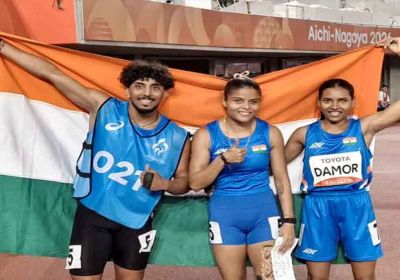 Asian Para Games 2026: तीसरे दिन भारत का धमाकेदार आगाज, 3 गोल्ड के साथ मेडल की संख्या 48 पहुंची
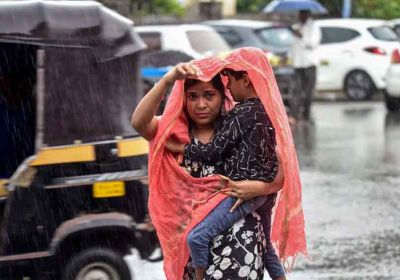 MP Weather Update: मध्य प्रदेश में बदलेगा मौसम, 40 किमी की रफ्तार से हवाएं और कई जिलों में बारिश का अलर्ट
 शिवपुरी में पत्नी को दोस्त के साथ देखकर भड़का पति, चचेरे भाई संग मिलकर दोनों को पीटा
 रांची के सभी 53 वार्डों में बनेंगे वेंडिंग जोन, फुटपाथ दुकानदारों को मिलेगा तय स्थान
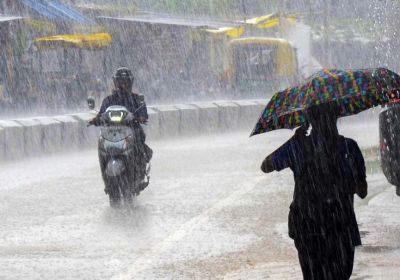 MP के 10 जिलों में आज तेज बारिश का अलर्ट, पूर्वी हिस्से में अति भारी बारिश की चेतावनी
 पीएम किसान सम्मान निधि बनी मेघमणि साहू की खेती का सहारा, बीज-खाद और कृषि कार्यों के खर्चों में मिली राहत
 खप्पर यात्रा में आधी रात तलवार लेकर निकलीं देवी, डिप्टी CM विजय शर्मा ने किए दर्शन
 पश्चिम बंगाल में सियासी हलचल, महिला तृणमूल अध्यक्ष सबीना यास्मीन ने दिया इस्तीफा
 झारखंड में राजस्व संग्रह घटा, छह महीने में 1564 करोड़ की कमी, GST कलेक्शन में भारी गिरावट
 डीजी जेल हिमांशु गुप्ता के कर कमलों से केंद्रीय जेल, रायपुर में छत्तीसगढ़ राज्य की प्रथम महिला खुली जेल (वीमेन ओ.सी.आई.) का शुभारंभ
 ग्राम पंचायत जितनी बढ़ाएगी अपनी आय, सरकार उतनी ही देगी अतिरिक्त धनराशि, आत्मनिर्भर गांव बनाने पर जोर
 भोपाल के हर घर को मिलेगी यूनिक डिजिटल आईडी, 7.40 लाख मकानों की मैपिंग पूरी
 कुम्हारपारा आंगनबाड़ी केंद्र में सजा ‘आंगन मिलन’
पाठको की राय